


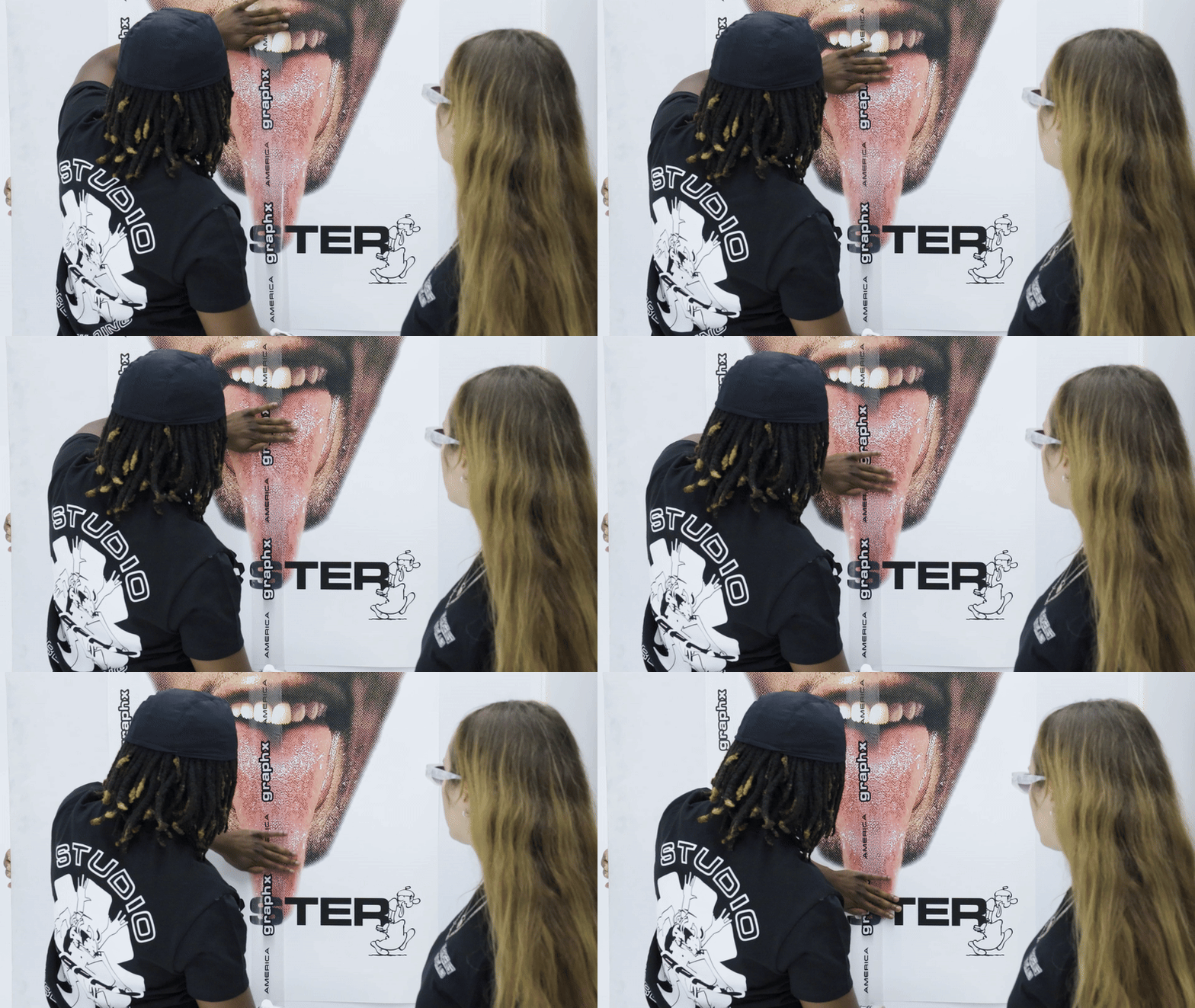




Research Layer: Matija Gabrilo
Research Layer is a series that highlights the research practice of creators and archivists on and offline.

Matija Ethan Gabrilo is a creative consultant, art director, visual researcher, and designer whose endeavors span the varied landscapes of culture and commerce. Unfettered by conventional instruction, his autodidactic process has nurtured a discerning mind.
What draws you to Are.na's platform?
It strips away everything that makes other platforms unusable for actual thinking. There's no feed optimized to hold your attention, no sponsored content, no suggestion engine deciding what you should care about. You're just alone with the material.
Your archiving style reads as a generalist — how would you describe your approach?
I'd resist that framing. I show up to the platform daily and the volume is high, which I think reads as generalist from the outside. From the inside it's more like compulsive quality control across disciplines. The range is wide but it's not casual. There's a consistent filter being applied across every domain I touch.
How would you describe your process for organizing Are.na channels?
Some channels exist to serve a specific engagement. Pulling together visual territory for a campaign, mapping tonal references for a brand. Those have a clear expiration or utility. Others have no destination at all. They're ongoing repositories where the value is accumulated over time through exposure and comparison.
As a creative director, how does your research practice move from collection to execution?
Most people build reference decks to approximate a desired outcome. My approach is inverted. I'm primarily using what I've collected to rule things out. Once you've absorbed enough material in a given space you develop an instinct for what's been overdone, what's derivative, what's trending toward irrelevance.

When researching, what triggers you to archive something?
There's usually a gut-level response first. Something stops me. Then I try to interrogate it. Can I identify what's actually working here on a technical or conceptual level? The common denominator is that I'm responding to significance, not just personal attraction.

.avif)
Your largest channel is editorial / layout / still_, how and why did it become your largest?
I've been increasingly focused on understanding what happens between capture and final output, how a raw image becomes a finished piece. That interest compounds quickly because every project I encounter has a lighting or color dimension worth examining. It grew organically from being the most universally applicable area of study in my practice.
What impact do you think archiving media can have on culture?
Deliberate archiving preserves work that would otherwise disappear into the feed cycle. And when those archives are public, they become shared points of reference. Someone encountering your collection and recognizing the same value in it is a far more honest form of cultural exchange than anything algorithmic proximity can produce.


Do you think research can be transformative as a social platform?
When someone follows a channel or contributes to one, they're signaling alignment in how they see and evaluate the world. That's a fundamentally different basis for connection than what any engagement-driven platform offers. Some of the most meaningful professional relationships I've built started from overlapping taste on Are.na.
How does research inform the non-work aspects of your life?
The distinction between research mode and everything else doesn't really exist for me. The same attentiveness I bring to evaluating a typeface or a campaign image is operating when I'm walking through a city, watching a film, even eating somewhere for the first time. Once you've trained yourself to notice detail and interrogate why something works or doesn't, that lens doesn't have an off switch. It just becomes how you move through the world.
Recent Volumes

Architect's Memo: Community Format

.avif)